
Bathroom remodels often go over budget because demolition reveals hidden damage, homeowners change the project scope, plumbing or electrical systems need upgrades, or the original estimate leaves out important costs. The best way to control spending is to inspect the bathroom before finalizing the plan, compare itemized contractor estimates, reserve 15%–25% for unexpected conditions in older homes, and approve changes in writing.
Introduction
A bathroom remodel rarely involves just replacing a vanity, installing new tile, and choosing a modern shower fixture. Once demolition begins, contractors may discover deteriorated flooring, leaking plumbing connections, damaged framing, or outdated electrical work that was impossible to assess from the finished room alone.
These surprises are particularly relevant in older American houses. A bathroom in a 1930s home may have plaster walls, aging drain connections, and decades-old repairs. A 1940s or 1950s house may still have galvanized steel supply pipes or cast-iron drains. Even bathrooms in 1970s and 1980s homes can contain previous renovation defects, worn shutoff valves, and concealed water damage.
Hidden damage is not the only reason budgets grow. Homeowners sometimes change tile selections after ordering materials, upgrade fixtures during construction, or move a toilet without fully understanding the plumbing work involved. Contractors may also discover permit requirements or material availability problems that affect the schedule and labor costs.
Understanding why these costs appear can help you distinguish necessary repairs from optional upgrades. It also makes it easier to decide what should be repaired, what should be replaced, and where to save money without compromising safety or workmanship.
Table of Contents
- Common Causes of Bathroom Budget Overruns
- 1. Hidden Water Damage and Structural Repairs
- 2. Scope Changes and Last-Minute Upgrades
- 3. Unexpected Plumbing and Electrical Work
- 4. Waterproofing Problems and Incorrect Installation
- 5. Labor, Materials, and Scheduling Delays
- 6. Permits, Code Requirements, and Older-Home Hazards
- How to Keep a Bathroom Remodel on Budget
- Four Common Homeowner Situations
- Related Reading
- Frequently Asked Questions
- Final Thoughts
Common Causes of Bathroom Budget Overruns
Before construction begins, separate the planned renovation costs from expenses that depend on what the crew finds after demolition. The distinction matters because some additional work is genuinely necessary, while other increases result from optional changes or an incomplete initial estimate.
| Cause | Why Costs Increase | Practical Fix | Potential Cost Impact |
|---|---|---|---|
| Hidden water damage | Wet subfloors, deteriorated framing, or damaged drywall require removal and repair | Inspect accessible areas and establish a concealed-damage allowance | Hundreds to several thousand dollars or more, depending on the extent |
| Changes to the original plan | Different tile, fixtures, layouts, or finishes may require additional labor and materials | Finalize selections and approve written change orders | From relatively small material differences to thousands of dollars |
| Plumbing or electrical upgrades | Old pipes, damaged valves, unsafe wiring, or relocated fixtures require additional work | Inspect systems before finishing the estimate and keep fixture locations when practical | Hundreds to several thousand dollars or more |
| Waterproofing failures | Incorrect membranes, drain details, or shower assemblies require corrective work | Specify the waterproofing system and inspect it before tiling | Potentially several thousand dollars if a shower must be rebuilt |
| Labor and delivery delays | Unavailable materials, trade scheduling conflicts, or extended construction increase costs | Order major products early and confirm the project schedule | Depends on labor terms, delay length, and material availability |
| Permits and hazardous materials | Required inspections, testing, specialized handling, or code-related upgrades add expenses | Check local rules and assess suspect materials before demolition | Highly variable by location and project scope |
Budgeting note: These cost impacts are broad planning descriptions, not guaranteed prices. Labor markets, bathroom size, construction methods, material quality, and the amount of concealed damage can change the total substantially.
1. Hidden Water Damage and Structural Repairs
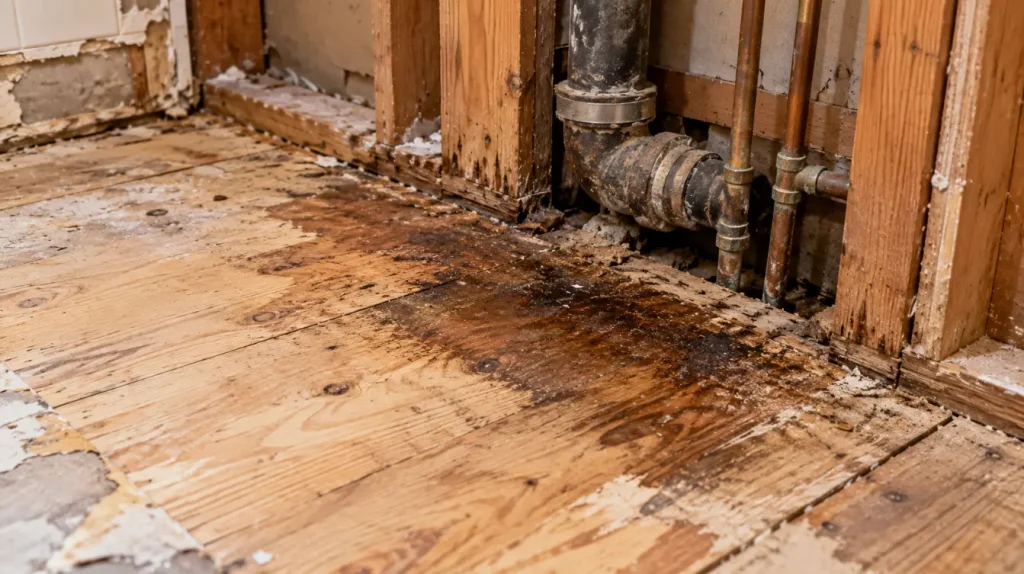
One of the most common reasons bathroom remodels exceed their original budgets is damage beneath the visible finishes. A floor may look solid until the toilet is removed. Tile may appear intact even though water has damaged the substrate behind it. A ceiling stain below an upstairs bathroom may point to an older leak that was never properly repaired.
Why hidden damage is common in older homes
In homes built during the 1930s through the 1950s, decades of use can weaken seals, drain connections, and flooring around tubs and toilets. A previous owner may have covered a stain with paint or installed new flooring without correcting a leak. In houses with crawl spaces or unfinished basements, accessible areas may reveal plumbing leaks or moisture damage that is not visible from the bathroom itself.
A 1970s or 1980s home can have similar problems if the shower waterproofing was poorly installed or plumbing connections have deteriorated. Age provides context, but the actual condition of the building materials is what matters.
Warning signs and inspection methods
Look for soft flooring near the toilet or bathtub, loose tiles, persistent musty odors, peeling paint, recurring ceiling stains, and swollen trim. These signs do not prove a particular cause, but they help identify where further inspection is needed.
Before demolition, a contractor may inspect accessible plumbing, probe visibly damaged wood where appropriate, examine the ceiling below the bathroom, and check for previous repairs. Once finishes are removed, the contractor can assess the exposed subfloor, framing, and wall cavities. Suspected hazardous materials should be assessed before disturbing them.
Repair or replace?
If damage is limited to a small area of subflooring and the surrounding framing remains sound, a localized repair may be sufficient. If rot extends into joists or wall framing, the damaged materials may need more extensive replacement. The source of moisture must also be corrected; replacing damaged wood without fixing the leak or condensation problem invites further deterioration.
Localized repairs may cost hundreds of dollars, while extensive subfloor, framing, and finish repairs can reach several thousand dollars or more. Before approving additional work, ask the contractor to document the affected area, explain what needs replacement, and identify any related work that may be necessary.
2. Scope Changes and Last-Minute Upgrades
Another major cause of budget overruns is changing the project after work has started. A homeowner may decide to install a larger vanity, upgrade to a frameless glass enclosure, switch to premium tile, or move the shower after demolition. Each choice can affect materials, labor, measurements, and the work already completed.
Why small changes can become expensive
A different tile may require a new mortar system, additional leveling, a different layout, or more cutting time. Changing a vanity can affect countertop dimensions, plumbing connections, and delivery dates. Relocating a shower drain may require alterations to the subfloor and drainage system rather than simply moving a fixture.
In an older house, a change that appears cosmetic may interact with existing plaster walls, unusual framing, or plumbing that is difficult to access. The cost is therefore not limited to the price difference between two products.
How to prevent unnecessary change orders
- Finalize tile, fixtures, hardware, vanity dimensions, and finishes before construction whenever possible.
- Confirm product availability, delivery dates, and return policies before ordering.
- Ask the contractor to price each requested change, including added labor, materials, schedule effects, and any work that must be removed or redone.
- Approve the change in writing before the work proceeds.
Not every change should be rejected. If demolition reveals that the planned design cannot be installed safely or a product is unsuitable for the conditions, adjusting the scope may be sensible. The key is to distinguish a necessary correction from an optional upgrade and understand the cost of each choice.
Practical recommendation: Keep a written record of the original contract amount, approved changes, payments, and remaining allowance. This makes it easier to see whether the project is over budget because of concealed damage, owner selections, or a change in the contractor’s scope.
3. Unexpected Plumbing and Electrical Work
A bathroom renovation can expose plumbing and electrical problems that were hidden behind the old fixtures. New tile and a modern vanity do not solve deteriorated valves, leaking supply lines, poor drainage, or unsafe wiring. These problems may need to be corrected before the new bathroom can be completed.
Plumbing issues in older American homes
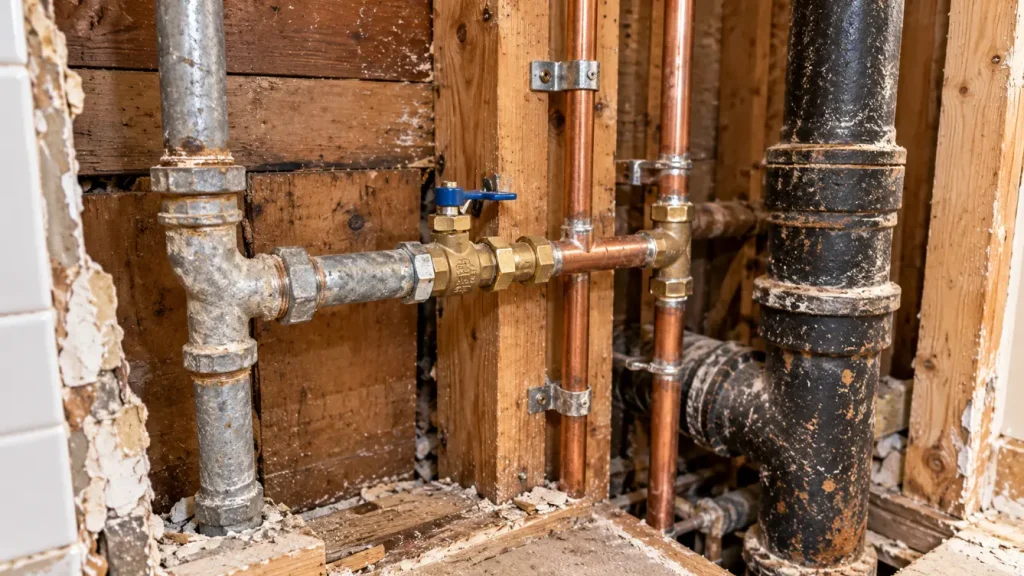
Galvanized steel supply pipes in older homes may develop internal corrosion that restricts water flow. Cast-iron drains can develop scaling, cracks, or deteriorated joints. Older shutoff valves may fail when disturbed, and previous repairs may have left inaccessible or poorly supported connections.
However, not every old pipe needs immediate replacement. A qualified plumber should consider visible condition, leak history, water flow, drainage performance, accessibility, and the expected scope of the remodel. Where appropriate, further evaluation may include inspection of concealed pipework or a drain camera inspection.
Electrical work can also increase the budget when the existing wiring, receptacles, lighting, or fan installation requires attention. Bathrooms have location-specific electrical protection requirements, and new fixtures must be suitable for their intended wet or damp environment.
How to control plumbing and electrical costs
Have the relevant trades inspect accessible systems before the final estimate is approved. Keep the toilet, tub, shower, and vanity in their existing locations when the layout is functional and there is no strong reason to move them. Relocating plumbing can increase labor, require additional access to walls or floors, and create more points where correct installation must be verified.
A localized valve repair may be relatively inexpensive compared with extensive repiping. Similarly, replacing an exhaust fan may be straightforward when suitable ductwork and wiring already exist, but adding new duct routes or electrical circuits can substantially increase the cost.
Ask contractors to separate necessary repairs from optional upgrades. If old piping is functioning adequately, the owner may choose to retain it after professional evaluation. If the system has repeated leaks or widespread deterioration, broader replacement may offer better long-term value than repeated patch repairs.
4. Waterproofing Problems and Incorrect Installation
Waterproofing should be planned before tile or shower finishes are selected. Tile, grout, and decorative wall panels do not automatically protect the framing behind them. If the shower membrane, seams, corners, drain connection, or plumbing penetrations are improperly installed, water can reach the subfloor or adjacent rooms.
Why waterproofing failures increase project costs
A shower can look finished while hiding defects that only become visible after water enters the wall or floor assembly. If the problem is discovered during the remodel, the contractor may need to remove part of the installation, repair the substrate, correct the membrane, and reinstall the finishes.
Trying to save money by skipping required waterproofing steps can make the original project cheaper while creating a higher risk of corrective work later. Adding surface caulk cannot reliably compensate for a missing or incorrectly installed waterproofing system.
How to avoid paying twice for the same work
Ask the installer to identify the waterproofing product and explain how it will integrate with the shower base, drain, corners, seams, and plumbing penetrations. Product instructions must be followed for coverage, thickness, curing, and compatibility. Where required, inspections and water tests should occur before tile conceals the assembly.
If an existing shower is sound and the remodel only involves unrelated cosmetic changes, retaining the shower may be more economical than replacing it. If there is persistent leakage, soft framing, a failed shower pan, or widespread damage, repairing the underlying assembly is usually more appropriate than simply covering the visible surface.
Corrective waterproofing costs vary widely. Replacing a small section of failed sealant is not comparable to rebuilding a shower and repairing water-damaged framing. Request a clearly defined scope and documentation of the underlying problem before authorizing a major repair.
5. Labor, Materials, and Scheduling Delays
Bathroom remodeling depends on several trades working in the right sequence. Demolition, plumbing, electrical work, inspections, waterproofing, tile installation, and fixture fitting all depend on earlier tasks being completed correctly. A delay in one stage can affect the rest of the project.
Common reasons schedules and budgets slip
- Special-order tile, vanities, glass doors, or fixtures arrive late or damaged.
- Products are delivered with incorrect dimensions or incompatible fittings.
- Different trades cannot complete work on their planned dates.
- Materials require additional preparation, drying, or curing time.
- Demolition reveals repairs that must be completed before the next trade can proceed.
Costs associated with these problems depend on the contract, the length of the delay, labor arrangements, and whether additional work is required. Do not assume that every scheduling delay automatically creates an extra charge. Ask the contractor to explain which costs are actually changing and why.
How to reduce delays
Select major fixtures early, confirm measurements, and check delivery dates before scheduling installation. Keep records of product names, model numbers, finishes, and order confirmations. Discuss substitutions before accepting them, especially when a different fixture would require changes to plumbing or cabinetry.
For tile and waterproofing work, avoid rushing required preparation and curing steps to meet an arbitrary completion date. Saving a day during installation is not worthwhile if it creates a risk of failure that requires demolition and rebuilding later.
6. Permits, Code Requirements, and Older-Home Hazards
Permits and code-related work can be overlooked when the original estimate focuses only on visible renovations. Requirements vary by local jurisdiction and project scope. Cosmetic replacements may be treated differently from plumbing relocation, electrical modifications, or structural changes.
Before work begins, check with the local building department to determine whether permits or inspections are required. Confirm which party will obtain permits, schedule inspections, and address any issues found during the process.
Older homes also deserve special care before demolition. Houses built before 1978 may contain lead-based paint, while some older flooring products, adhesives, and other building materials may contain asbestos. Do not sand, break, or remove suspect materials until they have been assessed and the appropriate handling requirements are understood.
If the property has a basement or crawl space, check whether moisture from plumbing leaks, groundwater, or exterior drainage may be contributing to bathroom damage. A recurring water problem may require attention beyond the bathroom itself. Replacing the bathroom finishes without correcting the wider moisture source can allow the damage to return.
Budget recommendation: Ask the contractor to identify likely permit fees, inspection requirements, hazardous-material assessment needs, and potential code-related work before finalizing the budget. Uncertainty should be documented rather than hidden inside an unexplained allowance.
How to Keep a Bathroom Remodel on Budget
The most effective way to control costs is to make major decisions early and create a process for dealing with problems that are discovered later. An older home will not always reveal every concealed condition before demolition, but a detailed plan can make unexpected expenses easier to evaluate.
1. Establish a realistic budget and contingency fund
Start with an itemized estimate covering demolition, disposal, materials, labor, plumbing, electrical work, waterproofing, permits, and finishing. For an older house with uncertain concealed conditions, consider reserving approximately 15%–25% of the planned budget for unexpected work. A heavily damaged bathroom may require a larger allowance, while a well-inspected cosmetic renovation may need less.
2. Separate necessary repairs from optional upgrades
Correcting an active leak, damaged subfloor, unsafe wiring, or failed waterproofing takes priority over changing to a more expensive faucet finish. If the budget tightens, postpone decorative upgrades that do not affect safety, water management, or essential function. Do not save money by concealing damaged materials or skipping necessary installation steps.
3. Compare estimates by scope, not just total price
Ask each contractor to list the work included, the materials specified, and the items excluded. Compare allowances for tile, fixtures, cabinetry, demolition, and repairs. A lower bid may exclude permits, disposal, subfloor replacement, or other work that another estimate includes.
4. Use written change orders
Every material change to the scope should identify the added or reduced cost, schedule effect, and work being modified. Written approval creates a clearer record and reduces disputes about whether an expense was expected.
5. Inspect work before it is covered
Confirm that concealed plumbing, electrical work, waterproofing, and required inspections are complete before walls and floors are closed. Photographs of concealed work, product documentation, and inspection records can be useful for maintenance and future repairs.
Four Common Homeowner Situations
Scenario 1: A homeowner remodeling a 1940s bathroom on a limited budget
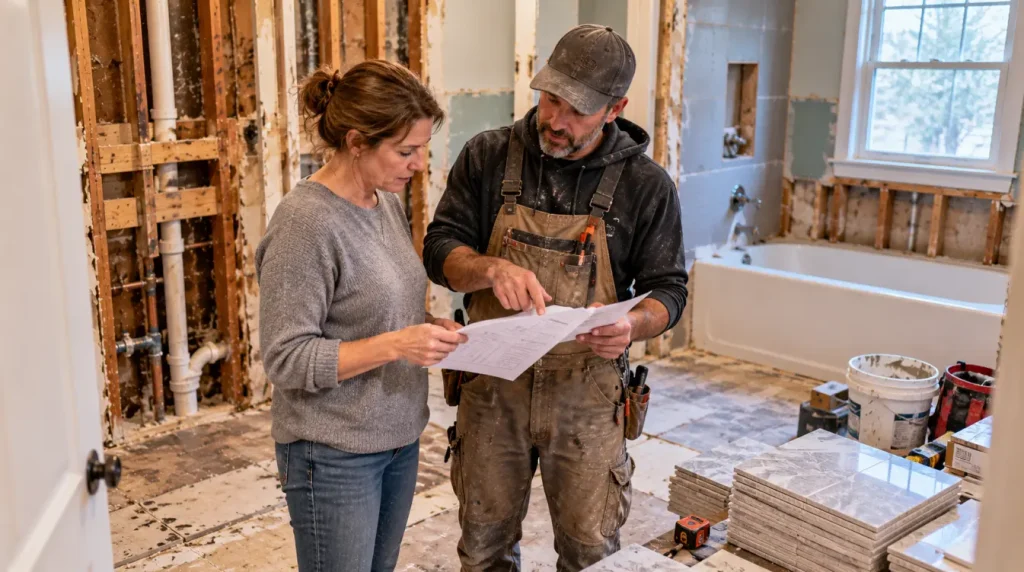
Start by evaluating the existing layout, plumbing, floor condition, and ventilation. If the fixtures are functional and the layout works, keeping their locations can help control labor costs. If demolition reveals a localized area of damaged subfloor, determine whether it can be repaired without replacing the entire floor. Prioritize active leaks and structural concerns before purchasing premium finishes.
Scenario 2: A home still has galvanized supply pipes
Have a plumber assess visible corrosion, water flow, leak history, and accessible connections before new bathroom finishes conceal them. Localized repair may be reasonable when deterioration is limited, while widespread corrosion or repeated failures may justify a broader repiping project. Compare the cost of addressing the system now with the disruption of opening finished walls later. Do not assume that every old pipe must be replaced, but do not ignore evidence of continuing deterioration.
Scenario 3: A basement ceiling has recurring stains beneath the bathroom
Investigate the possible source before approving a cosmetic renovation. The cause may be a toilet seal, a tub or shower drain, a supply connection, or another plumbing issue. A qualified professional can inspect accessible connections and determine whether further testing is needed. Repair the source, dry the affected materials appropriately, and replace damaged finishes only after the cause has been addressed. Repainting the ceiling without correcting the leak can turn a small problem into repeat work.
Scenario 4: The homeowner plans to sell the property soon
Focus on defects that affect function, safety, visible condition, and buyer confidence. Repair active leaks, damaged flooring, faulty ventilation, and loose fixtures before considering optional luxury upgrades. Keep records of repairs, permits, and product information. A full redesign may be justified if the bathroom is severely deteriorated, but cosmetic work should be evaluated against the property’s condition and local market expectations.
Which approach is best for your budget?
- Best for budget-conscious homeowners: Preserve a functional layout, keep serviceable fixtures, and prioritize leaks, ventilation, and damaged building materials.
- Best for long-term homeowners: Invest in reliable waterproofing, durable and maintainable materials, and a thorough assessment of aging plumbing and electrical systems.
- Best before selling: Correct functional defects, document repairs, and avoid premium upgrades that may not suit the property’s market.
- Best for rental properties: Choose durable finishes, accessible shutoff valves, readily available replacement parts, and easy-to-clean surfaces. Follow applicable rental and safety requirements.
Related Reading
Bathroom cost overruns sometimes reveal larger maintenance issues that deserve separate investigation. Once the immediate problem has been identified, related guides can help homeowners understand repair options and prevent similar damage elsewhere in the house.
- Learn how to investigate possible leaks behind bathroom walls and beneath floors in a guide to finding and fixing hidden water leaks in an old house.
- Explore the causes of recurring dampness, condensation, and water damage in older homes.
- Review the warning signs of aging galvanized pipes and the factors that determine whether repair or replacement makes more sense.
Frequently Asked Questions
How much should I set aside for unexpected bathroom remodeling costs?
For an older home with uncertain concealed conditions, a contingency reserve of approximately 15%–25% of the planned project budget can provide a useful starting point. The right allowance depends on the bathroom’s condition, the extent of demolition, the age of the plumbing, and how much can be inspected beforehand. A remodel involving known water damage or major plumbing changes may need a larger reserve. Keep the contingency separate from the money allocated to fixtures and finishes, and do not treat it as an amount that must be spent. Ask contractors to document unexpected findings and explain why additional work is necessary before approving costs.
Can I reduce bathroom remodeling costs by keeping the existing layout?
Yes, retaining a functional layout can reduce labor and material costs because moving a toilet, shower, or tub may require changes to drain piping, venting, water supply lines, flooring, and surrounding finishes. Keeping fixtures in place does not eliminate the need to inspect existing plumbing or waterproofing, but it can reduce the number of changes and connections involved. Before committing to the layout, confirm that the fixtures have suitable clearances and can be installed according to applicable requirements. A layout change can still be worthwhile when the existing room is impractical or accessibility needs have changed, provided the extra cost is understood in advance.
Should I repair an old bathroom or replace everything during the remodel?
Repairing selected components may be the better choice when the layout functions well and the tub, vanity, plumbing, and surrounding structure remain serviceable. Replacement becomes more attractive when several components are deteriorating, repeated repairs are accumulating, or the existing design creates ongoing usability problems. In an older home, the decision should be based on inspection findings rather than age alone. Ask qualified professionals to distinguish cosmetic wear from concealed damage and explain the expected benefits of each option. Replacing serviceable fixtures may improve appearance, but necessary repairs to leaking plumbing, failed waterproofing, or damaged framing should take priority.
What should I do if my contractor says the bathroom remodel needs more money?
Ask for a written explanation of the additional work, photographs or other documentation where appropriate, and an itemized cost breakdown. Determine whether the expense results from concealed damage, a code-related requirement, a material substitution, an owner-requested change, or work omitted from the original estimate. Review the contract and any provisions for change orders before authorizing additional work. If the finding is significant or the explanation is unclear, consider obtaining an independent opinion from an appropriate qualified professional. Avoid approving changes under pressure without understanding their necessity, cost, and effect on the schedule. At the same time, do not ignore a genuine safety or water-damage problem simply to preserve the original budget.
Final Thoughts
Bathroom remodels usually go over budget for identifiable reasons: hidden damage, incomplete estimates, scope changes, plumbing or electrical problems, waterproofing failures, and scheduling issues. Some additional costs cannot be known until demolition begins, but many avoidable expenses can be reduced through inspection, careful product selection, and clear communication with contractors.
Before construction starts, request an itemized estimate, confirm what is excluded, set aside a contingency reserve, and finalize the major design decisions. In an older American home, investigate moisture damage and aging plumbing before covering those systems with new finishes.
When unexpected work appears, ask what caused it, whether repair or replacement is appropriate, and what evidence supports the proposed solution. A disciplined decision-making process helps preserve the budget without sacrificing safety or long-term performance.
