
The most common bathroom remodeling mistakes include underestimating costs, overlooking waterproofing, choosing inadequate ventilation, ignoring aging plumbing, and selecting materials that are difficult to maintain. Homeowners can prevent many expensive problems by inspecting existing conditions, planning the layout before ordering fixtures, using compatible waterproofing systems, and checking critical work before walls and floors are closed.
Introduction
A bathroom remodel can make an older American home more comfortable, functional, and easier to maintain. However, removing a bathtub, replacing a vanity, or installing new tile can reveal problems that were hidden for decades. What appears to be a straightforward cosmetic project may uncover a damaged subfloor, corroded water lines, failed shower waterproofing, or inadequate electrical work.
These challenges are especially relevant in homes built during the 1930s, 1940s, and 1950s, when plumbing materials, wall assemblies, and construction methods often differ from those used today. Even homes built in the 1970s and 1980s can have aging valves, previous renovation defects, and moisture damage behind finished surfaces.
The biggest mistakes usually involve decisions made before construction begins. Choosing tile without understanding the waterproofing system, moving a toilet without evaluating the drain layout, or spending the entire budget on visible finishes can create problems that are expensive to correct later.
Understanding the common risks makes it easier to compare repair and replacement options, ask contractors better questions, and spend money where it provides the greatest long-term benefit.
Table of Contents
- Bathroom Remodeling Mistakes at a Glance
- 1. Poor Layout Planning
- 2. Underestimating the Budget
- 3. Overlooking Shower Waterproofing
- 4. Ignoring Bathroom Ventilation
- 5. Ignoring Existing Plumbing Problems
- 6. Choosing the Wrong Materials
- 7. Overlooking Lighting, Electrical Safety, and Storage
- 8. Ignoring Older-Home Conditions and Permits
- Recommendations for Different Homeowners
- Internal Link Opportunities
- Frequently Asked Questions
- Final Thoughts
Bathroom Remodeling Mistakes at a Glance
Some remodeling problems are preventable through better planning, while others become apparent only after demolition. The following comparison can help homeowners identify where to focus their budget and attention.
| Common Mistake | Possible Consequence | How to Avoid It | Typical Cost Consideration |
|---|---|---|---|
| Poor layout planning | Cramped movement, inconvenient fixtures, expensive changes | Measure the room and confirm fixture dimensions before ordering | Late layout changes may add hundreds or thousands of dollars |
| Insufficient budget | Incomplete work or unexpected expenses | Obtain itemized estimates and reserve contingency funds | Consider a 15%–25% contingency for an older home with uncertain concealed conditions |
| Failed waterproofing | Damaged framing, subfloors, and adjacent rooms | Inspect membranes, seams, corners, and drain connections before tiling | Corrective work can cost hundreds to several thousand dollars or more |
| Poor ventilation | Condensation, peeling paint, recurring dampness | Install an appropriately sized fan that exhausts outdoors | A straightforward fan project may cost a few hundred dollars; difficult ductwork costs more |
| Uninspected plumbing | Leaks, poor flow, blocked drains, premature repairs | Check accessible supply lines, drain piping, valves, and connections | Minor repairs may cost hundreds; extensive repiping can cost several thousand dollars or more |
| Unsuitable materials | Slippery floors, damaged finishes, difficult maintenance | Choose products based on moisture exposure, durability, and cleaning needs | Product quality and installation requirements strongly affect the total |
Cost disclaimer: These are broad U.S. planning considerations, not guaranteed national averages. Local labor rates, bathroom size, material selection, permit requirements, and concealed damage can substantially change the final price.
1. Poor Layout Planning
A bathroom can look attractive in a catalog yet feel awkward to use every day. Common mistakes include installing a vanity that blocks a doorway, leaving too little space beside the toilet, choosing a shower door that strikes another fixture, or placing storage where it interferes with movement.
Why layout mistakes happen
Homeowners sometimes purchase individual fixtures before checking how they will fit together. In an older house, existing drain lines, vent piping, wall framing, windows, and radiators can limit the available space. Moving a toilet, for example, may require changes to the drain connection, venting, subfloor, and sometimes the surrounding structure.
How to avoid the problem
Measure the room before buying anything. Record the location of doors, windows, plumbing connections, and floor transitions. Use a scaled floor plan to confirm the dimensions of the proposed toilet, vanity, bathtub, and shower. Check manufacturer installation requirements and locally applicable clearance rules.
Pay attention to door swings, vanity drawers, shower access, and everyday movement. A smaller vanity or recessed medicine cabinet may provide a better result than moving major plumbing simply to fit a larger product.
Repair or replace? If the existing layout works and the fixtures are serviceable, retaining their locations is often the more economical option. Reconfiguration makes more sense when the current layout significantly limits accessibility or when other necessary repairs already require changes to the plumbing.
2. Underestimating the Budget
An unrealistic budget is one of the most disruptive bathroom remodeling mistakes. An initial estimate may include new fixtures and tile but exclude demolition, debris disposal, plumbing modifications, electrical upgrades, permits, damaged flooring, and repairs to nearby rooms.
Hidden costs in older homes
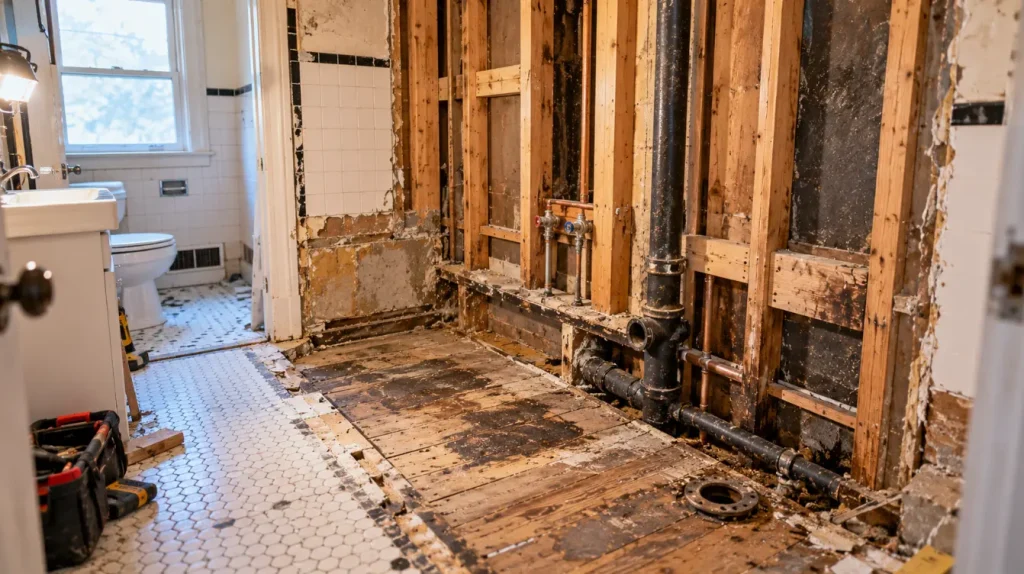
A bathroom in a 1930s or 1940s house may have a soft subfloor near the tub, deteriorated wood around the toilet, or water-damaged framing behind the shower. A 1950s home may still have galvanized supply piping or older drain connections. Even a more recently renovated bathroom can conceal poorly completed repairs from previous owners.
Homes built before 1978 may contain lead-based paint. Some older flooring products, adhesives, and other building materials may contain asbestos. Suspect materials should be assessed before demolition or other disturbance, because removing them can introduce specialized testing, handling, and disposal requirements.
How to establish a realistic budget
- Request itemized estimates for demolition, disposal, labor, fixtures, plumbing, electrical work, and finishing.
- Ask which items are excluded, including permit fees, painting, subfloor replacement, and repairs to damaged framing.
- Reserve approximately 15%–25% of the budget for unexpected conditions when renovating an older home with uncertain concealed materials.
- Select major products before construction to reduce delays, substitutions, and last-minute expenses.
As a broad planning example, a full conventional bathroom remodel may fall around $8,000–$30,000 or more, while a small cosmetic update may cost substantially less. Large bathrooms, premium finishes, extensive plumbing changes, structural repairs, and high-cost labor markets can push the total above this range.
Professional recommendation: Ask the contractor how additional work will be documented and priced if demolition reveals hidden damage. A clear change-order process is more useful than a low initial quote that leaves major exclusions unexplained.
3. Overlooking Shower Waterproofing
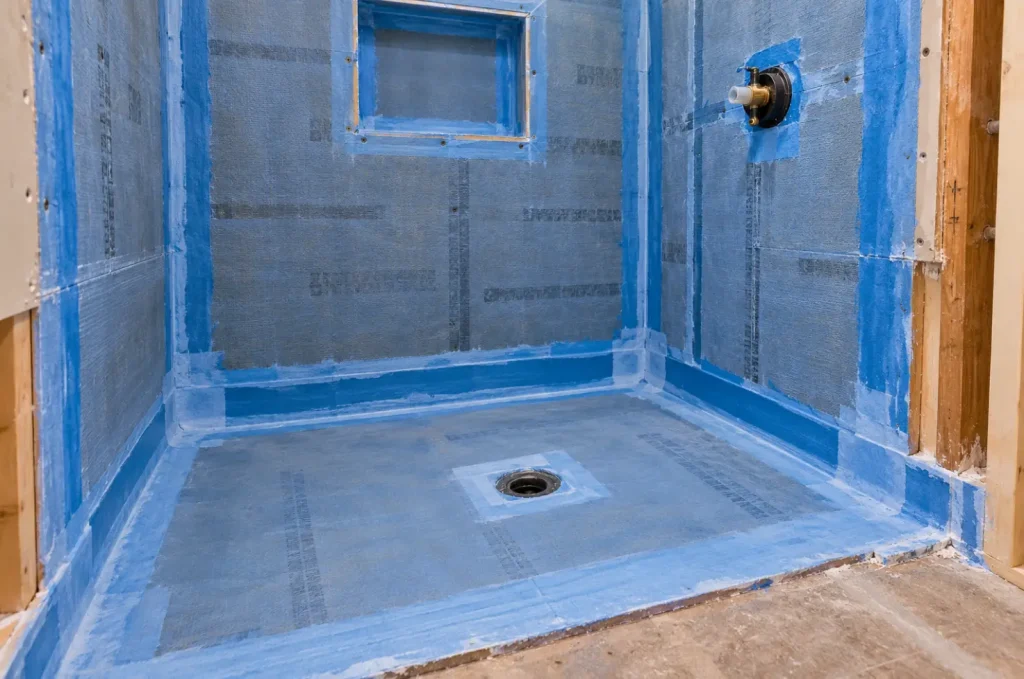
Tile is not a complete waterproofing system. Water can pass through grout joints, failed sealant, unprotected penetrations, and poorly constructed transitions. If the underlying shower assembly is not designed and installed correctly, moisture can reach the wall framing, subfloor, or neighboring rooms.
Common waterproofing mistakes
Typical problems include relying on cement backer board alone to stop water, combining incompatible products, leaving gaps around plumbing penetrations, and failing to seal corners or drain connections. Installing new tile over a damp or unstable substrate can hide existing damage rather than correct it.
How to prevent shower leaks
Before work begins, ask which waterproofing system will be used and how its seams, corners, drain connection, and plumbing penetrations will be handled. The installer should follow the manufacturer’s requirements for coverage, membrane thickness, curing time, and compatible materials.
Appropriate inspections and required water testing should be completed before tile conceals the shower assembly. The specific test depends on the waterproofing system, shower construction, and applicable requirements.
Caulk and grout are maintenance items, not substitutes for a properly designed waterproof assembly. Adding more sealant will not reliably correct a missing membrane or a failed shower pan.
Repair or replace? Localized failed caulk can often be replaced when the surrounding assembly is sound and no underlying damage exists. Persistent leaks, loose tiles, soft framing, a failed shower pan, or widespread water intrusion may require opening the affected area and rebuilding part or all of the shower.
Depending on the extent of damage, a small repair may cost hundreds of dollars, whereas rebuilding a shower or repairing damaged framing and finishes can cost several thousand dollars or more.
4. Ignoring Bathroom Ventilation
Bathroom ventilation removes moisture generated by showers, baths, and daily use. Without sufficient exhaust, humid indoor air can condense on cold windows, exterior walls, ceilings, and other surfaces. Repeated condensation can contribute to peeling paint, damaged finishes, and conditions favorable to mold growth.
Warning signs of inadequate ventilation
- Mirrors remain fogged long after bathing.
- Paint peels or ceiling stains repeatedly appear.
- Musty odors return despite routine cleaning.
- Moisture frequently collects on windows or nearby exterior walls.
These signs do not prove that hidden mold or structural damage exists, but they indicate that moisture control deserves attention. A ventilation problem should be distinguished from a plumbing leak or water entering through the building exterior.
Choosing and installing the right fan
Choose a fan appropriate for the room’s size, fixture layout, and use. Many bathrooms use fans rated around 50–110 cubic feet per minute, but the appropriate capacity depends on room dimensions, duct resistance, and applicable ventilation requirements.
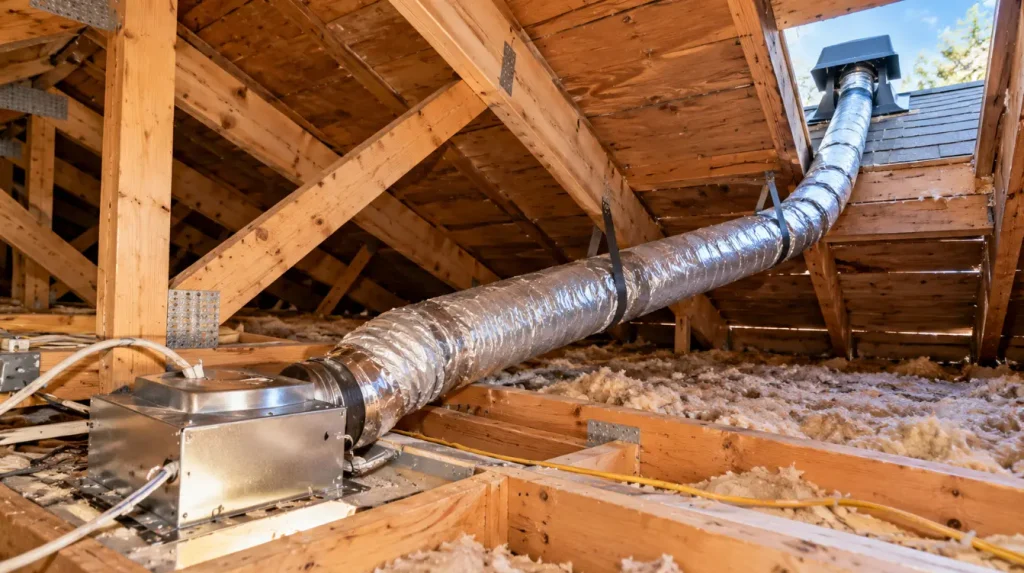
The exhaust duct should terminate outdoors through an approved outlet, not in an attic, crawl space, or wall cavity. Discharging humid bathroom air into an attic can create moisture issues in the roof structure and insulation.
A timer or humidity-sensing control can help the fan run long enough after bathing. A straightforward fan replacement or installation may cost a few hundred dollars, while new ductwork, difficult ceiling access, or electrical modifications can increase the total.
Regional conditions also matter. Bathrooms in humid parts of the Southeast may have different moisture loads from those in colder northern states, where cold surfaces can encourage winter condensation. Both situations require effective moisture control and correctly installed exhaust ventilation.
5. Ignoring Existing Plumbing Problems
Installing a new vanity, toilet, or shower without evaluating the existing plumbing can leave old problems hidden behind expensive new finishes. New fixtures do not automatically correct corroded supply lines, deteriorated drain connections, leaking shutoff valves, or poor drainage.
What should be inspected?
Before closing walls and floors, a qualified plumber can assess accessible supply lines, drain piping, shutoff valves, toilet connections, visible corrosion, drainage performance, and evidence of previous leaks. If the symptoms justify it, further evaluation may include checking concealed piping or inspecting a main drain with appropriate equipment.
In homes built during the 1930s through the 1950s, galvanized steel supply pipes may have internal corrosion that restricts water flow. Cast-iron drain piping can develop scaling, corrosion, cracks, and deteriorated joints. These materials do not automatically require replacement simply because they are old. Their condition, performance, accessibility, and repair history should guide the decision.
Homes from the 1970s and 1980s can also have worn valves, deteriorated seals, previous plumbing alterations, and concealed leaks. The construction date alone cannot establish whether the plumbing is serviceable.
When should plumbing be repaired or replaced?
A leaking accessible valve or damaged short pipe section may be suitable for localized repair. Widespread corrosion, repeated leaks, poor flow throughout the house, and recurring drain failures may justify a broader replacement plan. Ask the plumber to explain the expected benefit of each option rather than assuming that replacing every pipe is always necessary.
Keeping fixtures in their existing locations generally limits plumbing changes. Moving a toilet or shower can require changes to the drain, vent, water supply, and floor structure, adding hundreds or several thousand dollars depending on access and complexity.
Do not conceal new plumbing work before required inspections and testing are completed. If the renovation uncovers moisture damage, correct the source of the water and verify that affected materials are appropriately dry before restoring the finishes.
6. Choosing the Wrong Materials
A material that looks attractive in a showroom may perform poorly when exposed to constant moisture, abrasive cleaning, or heavy foot traffic. Good bathroom materials balance appearance, durability, maintenance requirements, slip resistance, and compatibility with the installation system.
Material selection mistakes
Highly polished floor tile may be slippery when wet. Some natural stones require more careful cleaning or periodic sealing. Certain finishes can stain or deteriorate when exposed to unsuitable cleaners. Large-format tile can reduce the number of grout joints, but it still requires an appropriately flat substrate and correct installation methods.
| Material | Advantages | Potential Drawbacks | What to Check |
|---|---|---|---|
| Porcelain tile | Low water absorption and broad design options | Installation can be costly; some finishes may be slippery | Floor suitability, slip performance, and installation requirements |
| Ceramic tile | Wide selection and often economical for walls | Product suitability varies; grout requires maintenance | Confirm the product is rated for its intended use |
| Acrylic tub or shower | Relatively lightweight and generally easy to clean | Can scratch or be damaged by unsuitable cleaners | Product care instructions and proper structural support |
| Natural stone | Distinctive appearance and natural variation | Some types require sealing and specialized cleaning | Maintenance needs and compatibility with bathroom use |
Service life depends on product quality, installation, usage, and maintenance. Properly installed tile may remain serviceable for decades, while caulk and grout can need repair much sooner. Acrylic fixtures can also last many years, but cracks, movement, surface damage, or inadequate support can shorten their useful life.
Before purchasing materials, request product specifications and installation instructions. For a family bathroom, consider how easily the surfaces can be cleaned and how they perform when wet. A modestly priced, well-suited material may provide better long-term value than a premium finish that requires unusually careful maintenance.
7. Overlooking Lighting, Electrical Safety, and Storage
Lighting and storage are often treated as finishing details, even though they strongly affect daily use. A single ceiling light may cast shadows on the face, while inadequate storage leaves counters cluttered and makes cleaning more difficult.
Plan general lighting and mirror-level task lighting where appropriate. Confirm that fixtures are rated for their intended damp or wet locations and that installation follows applicable electrical requirements.
Bathrooms commonly require ground-fault circuit-interrupter protection for receptacles in applicable locations. Exact requirements depend on the adopted electrical code and local amendments. A qualified electrician should assess new circuits, receptacle placement, outdated wiring, and any ungrounded circuits encountered during remodeling.
Measure medicine cabinets, drawers, towel bars, and shower niches before the final layout is approved. Recessed storage may save space, but cutting into an existing wall can be complicated by plumbing, wiring, studs, or structural framing. Confirm what is behind the wall before cutting.
For homeowners planning to remain in the house for many years, consider accessible controls, a stable shower entry, adequate lighting, and reinforcement for future grab bars. Installing reinforcement while the wall is open is often less disruptive than opening finished walls later.
8. Ignoring Older-Home Conditions and Permits
Older homes deserve careful inspection because visible finishes may not reveal the condition of the materials beneath them. A 1930s bathroom may have plaster walls and older framing, a 1940s home may contain several generations of repairs, and a 1950s property may still rely on aging metal piping. A 1970s or 1980s bathroom may have layered flooring, outdated alterations, or concealed leaks from failed seals.
Inspect before demolition
Look for soft flooring around the toilet, stained ceilings below an upstairs bathroom, loose tiles, cracked grout, musty odors, and recurring paint failure. These signs help identify areas for further investigation, but they do not establish the cause by themselves.
When old flooring, wall finishes, paint, or pipe insulation may contain hazardous materials, arrange appropriate assessment before disturbing them. Lead-based paint is a consideration in homes built before 1978, and some older flooring products and adhesives may contain asbestos. Avoid sanding, breaking, or removing suspect materials until potential hazards and applicable requirements have been assessed.
Check local permits and contractor responsibilities
Permit requirements vary by state and local jurisdiction. Replacing a cosmetic finish may be treated differently from moving plumbing, modifying electrical circuits, or changing structural components. Check with the local building department before work starts.
Compare contractor proposals by scope rather than price alone. A good written agreement identifies materials, included trades, permit responsibilities, the process for handling concealed damage, and payment milestones. Ask how waterproofing, plumbing, and electrical work will be inspected before finishes cover it.
If demolition reveals rotten framing or a damaged subfloor, the solution should address both the damaged material and the underlying moisture source. Replacing deteriorated wood without stopping the leak or condensation problem increases the chance of future damage.
Recommendations for Different Homeowners
The right remodeling strategy depends on the home’s condition, the available budget, and how long the owner plans to stay. The following situations illustrate how homeowners can prioritize work without automatically replacing everything.
Scenario 1: A homeowner remodeling a 1940s house on a limited budget
If the bathroom layout still works, retaining the toilet, tub, and vanity locations can reduce plumbing and reconstruction costs. Before selecting new finishes, inspect the flooring around the toilet and tub, test the exhaust fan, and evaluate accessible plumbing connections. If the subfloor is damaged or a leak is active, correct it before installing new flooring. Cosmetic work should come after moisture-related problems and safety concerns have been addressed.
Scenario 2: A home still has galvanized water supply pipes
If an older home has galvanized steel pipes, a bathroom remodel is a useful opportunity to assess the plumbing before new finishes conceal it. Reduced flow, recurring leaks, visible corrosion, or rusty water can justify further investigation, but these symptoms do not all prove that the entire system must be replaced. Ask a plumber to evaluate the affected lines and explain the difference between localized repairs and broader repiping. Replacement may be worth considering when deterioration is widespread or repeated repairs are becoming difficult to justify.
Scenario 3: A basement ceiling has recurring stains beneath the bathroom
A recurring stain below an upstairs bathroom may indicate a leaking supply connection, drain, toilet seal, tub, or shower assembly. It should not be treated as a painting problem until the source has been investigated. A plumber may examine fixtures, connections, and accessible piping, while a water-damage professional may assess affected building materials when necessary. Repair the source first, then address damaged finishes after the area has been appropriately dried. If the stain returns, investigate again rather than repeatedly covering it.
Scenario 4: A homeowner is preparing to sell the property
Before selling, prioritize functional defects, visible water damage, deteriorated caulk, poor ventilation, and loose or damaged fixtures. Keep invoices, product information, permit records, and documentation of completed repairs. A full luxury remodel may not be necessary if the existing bathroom is functional and the local market does not support the additional expense. Consider the property’s condition and likely buyer expectations before committing to major layout changes.
Which remodeling approach makes the most sense?
- Best for budget-conscious homeowners: Retain a functional layout, preserve serviceable fixtures, and prioritize plumbing leaks, ventilation, safety, and damaged substrates.
- Best for long-term homeowners: Invest in durable materials, reliable waterproofing, practical storage, and accessible features that may be difficult to add later.
- Best before selling: Correct documented defects, improve visible condition, and avoid upgrades that are unlikely to suit the property or local market.
- Best for rental properties: Choose durable finishes, readily available replacement parts, accessible shutoff valves, effective exhaust ventilation, and an easy-to-maintain layout. Check applicable rental and safety requirements.
Related Topics for Homeowners
Bathroom remodeling can reveal problems that extend beyond the room itself. If an inspection finds water stains, corroded pipes, or recurring dampness, it may be helpful to investigate the wider building system before finishing the renovation.
- Hidden water leaks: Learn how to recognize possible leaks behind bathroom walls, beneath floors, and around older plumbing connections.
- Moisture in older homes: Understand the difference between condensation, plumbing leaks, and water entering through the building exterior.
- Aging galvanized pipes: Review the warning signs that may justify plumbing repairs or replacement in older American houses.
Frequently Asked Questions
How much does it cost to remodel a bathroom without making major mistakes?
A small cosmetic update may cost several thousand dollars, while a full bathroom remodel can require a budget in the tens of thousands. A broad preliminary planning range for a conventional full remodel is approximately $8,000–$30,000 or more, depending on the bathroom’s size, location, materials, and labor. Moving plumbing, installing premium tile, repairing structural damage, and correcting concealed leaks can increase the total. Request itemized quotes covering demolition, labor, fixtures, permits, and finish work. For an older house, consider reserving approximately 15%–25% of the planned budget for unexpected conditions. This is a planning allowance, not a prediction that the entire reserve will be needed.
Can I remodel an old bathroom without replacing all the plumbing?
Yes. Old plumbing does not automatically need complete replacement simply because of the home’s age. If the accessible supply and drain lines are in good condition, function properly, and meet applicable requirements, retaining them may reduce disruption and expense. However, visible corrosion, repeated leaks, poor water flow, recurring blockages, deteriorated joints, or evidence of previous water damage deserves professional evaluation. In homes with galvanized steel supply pipes or old cast-iron drains, ask a plumber to assess the system and compare localized repairs with broader replacement. Make this decision before new walls and floors conceal important connections, and follow required inspection and testing procedures.
What is the most expensive bathroom remodeling mistake?
No single mistake is always the most expensive, but ignoring water intrusion can lead to substantial repair costs. A leaking shower, failed drain connection, or damaged toilet seal may affect flooring, framing, ceilings, and adjacent rooms. Poor layout planning and last-minute fixture changes can also become expensive when they require plumbing relocation or reconstruction. Prevention starts with inspecting the room before demolition, defining the layout, specifying a compatible waterproofing system, and agreeing on a process for approving additional work. If demolition reveals deteriorated materials, identify and correct the moisture source before installing new finishes.
How long does a bathroom remodel take?
A small cosmetic project may take several days to a couple of weeks, while a full remodel often takes several weeks or longer. The schedule depends on demolition, the number of trades involved, inspection requirements, product availability, curing and drying times, and whether concealed damage is discovered. Moving plumbing or rebuilding a shower can extend the work, particularly in an older home. Ask the contractor for a written schedule covering demolition, rough plumbing and electrical work, inspections, waterproofing, tile installation, fixture installation, and final checks. Allow for reasonable delays instead of planning household activities around an unrealistically short completion date.
Final Thoughts
The best bathroom remodel is not necessarily the most expensive one. It is the project that resolves existing problems, fits the household’s daily needs, and uses materials and installation methods suited to the house.
Before choosing tile or ordering fixtures, measure the room, inspect accessible plumbing, evaluate ventilation, plan the waterproofing system, and establish a realistic budget. In an older home, pay particular attention to concealed moisture damage, aging pipes, and potentially hazardous materials before demolition.
When comparing contractors, look beyond the quoted price. A clear scope of work, appropriate permits, documented inspections, and a process for handling hidden damage can help prevent expensive surprises. If a problem appears during demolition, determine its cause before covering it with new materials.
