Winter can be tough on an older home, especially when temperatures drop below freezing for several hours or days. A pipe tucked behind an exterior wall, running through an unheated basement, or crossing a cold crawl space may freeze before you notice anything is wrong. If the water inside expands enough to damage the pipe, you could end up with a burst line, water-damaged drywall, wet insulation, and an expensive cleanup.
Older homes can be particularly challenging because their plumbing may run through spaces that were never properly insulated. Some houses have exposed water lines in basements, crawl spaces, garages, or utility rooms. Others have pipes hidden inside exterior walls, where cold air can reach them through gaps in insulation or air sealing.
The good news is that preventing frozen pipes usually starts with a few practical steps: identify vulnerable pipe locations, protect them from cold air, maintain adequate indoor heat, and know where to shut off the water if a pipe freezes or bursts.
You do not necessarily need to repipe the entire house or install expensive heating equipment. The best approach depends on your home’s layout, the local winter climate, the condition of the plumbing, and how long the house will be left unattended.
Quick Answer: How Do You Prevent Frozen Pipes in an Older Home?
To prevent frozen pipes in an older home during winter, focus on these five priorities:
- Insulate exposed water pipes in basements, crawl spaces, garages, and other cold areas.
- Seal cold-air leaks around suitable wall penetrations and plumbing openings without blocking required ventilation or combustion-air openings.
- Keep the indoor temperature consistent. A commonly recommended minimum when away in cold weather is around 55°F (13°C), but vulnerable pipe locations may need additional protection.
- Disconnect outdoor hoses and winterize vulnerable exterior faucets according to the plumbing system’s design.
- Know the main water shutoff location and make sure it can be reached safely in an emergency.
Remember that pipe insulation slows heat loss but does not generate heat. A poorly insulated pipe in a freezing crawl space can still freeze, particularly during a prolonged cold snap. In high-risk locations, additional measures such as listed heat-tracing equipment, improved air sealing, or professional plumbing modifications may be necessary.
1. Why Older Homes Are More Vulnerable to Frozen Pipes
Not every old house has a freezing problem. Risk depends more on the location and condition of the plumbing than on the home’s age alone. However, older construction can create several conditions that deserve attention before winter.
Pipes in Exterior Walls
Water lines routed through exterior walls can be vulnerable when insulation is thin, damaged, or missing. Air leaks around windows, siding, and plumbing penetrations can make matters worse by allowing cold outdoor air to reach the pipes.
This is particularly important in older houses that have undergone several renovations. Insulation may have been added in one room without correcting gaps around pipes or other penetrations elsewhere.
Unheated Basements and Crawl Spaces
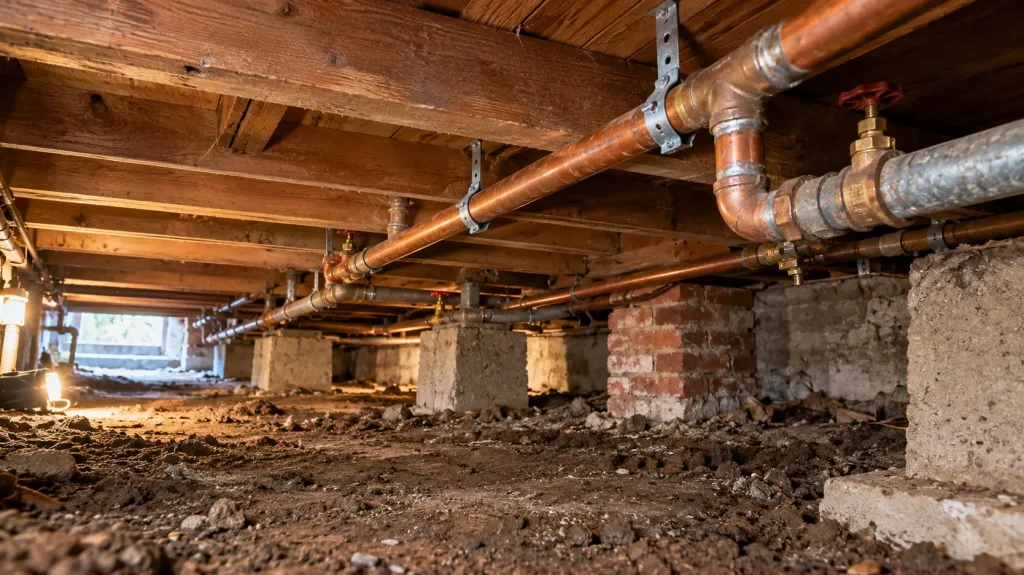
Some older homes have water supply lines running along basement joists or through crawl spaces. These areas may be much colder than the living space above, especially when outside air enters through openings or the crawl space lacks appropriate thermal protection.
A pipe that looks fine on a mild winter day may become vulnerable during a long period of below-freezing weather. Check these spaces before the first severe cold snap rather than waiting for the faucet to stop working.
Detached Garages and Utility Rooms
Water lines serving a laundry area, workshop, or utility sink can freeze if the surrounding room is not heated. A garage may feel reasonably sheltered while still reaching outdoor-like temperatures during an extended freeze.
Pay special attention to pipes near garage doors, exterior walls, and concrete floors. These locations may be exposed to cold air even when the rest of the house remains comfortable.
Aging Plumbing and Shutoff Valves
Older homes may contain galvanized steel, copper, or other types of supply piping installed during different renovation periods. Corrosion, outdated fittings, and deteriorated shutoff valves can complicate repairs if a pipe freezes or bursts.
Pre-winter maintenance is a good time to identify the main shutoff and have a plumber inspect valves or pipes that appear heavily corroded. Do not force a stuck valve simply to test it.
2. Find the Pipes Most Likely to Freeze
Before buying insulation or heat-tracing equipment, map the areas where your plumbing is most exposed to cold. Start with spaces that are unheated or separated from the home’s main living area.
- Basements: Check exposed pipes close to foundation walls, basement windows, rim joists, and outdoor air leaks.
- Crawl spaces: Look for pipes near exterior vents, damaged insulation, and openings where cold air can enter.
- Exterior walls: Pay attention to sinks and fixtures installed against exterior walls, especially in older additions.
- Garages: Inspect supply lines serving laundry equipment, utility sinks, and other water fixtures.
- Attics and roof spaces: Check any plumbing that passes through cold, poorly insulated areas.
- Outdoor faucets: Inspect hose connections and determine whether the faucet has an interior shutoff or another winterizing provision.
Look for gaps around pipe penetrations, missing pipe insulation, cold drafts, and insulation that has become wet or damaged. If you have access to a home’s renovation records, check whether pipes were relocated or added during previous work.
A useful approach is to take photos of exposed pipe runs before winter. That gives you a simple record of their condition and makes it easier to see whether insulation or other protective measures have shifted over time.
3. Insulate Exposed Water Pipes Properly
Pipe insulation is often one of the simplest ways to reduce freezing risk. It slows the rate at which a pipe loses heat, giving the surrounding space more time to stay above freezing. However, insulation alone cannot guarantee protection during prolonged severe cold.
Choose the Right Insulation
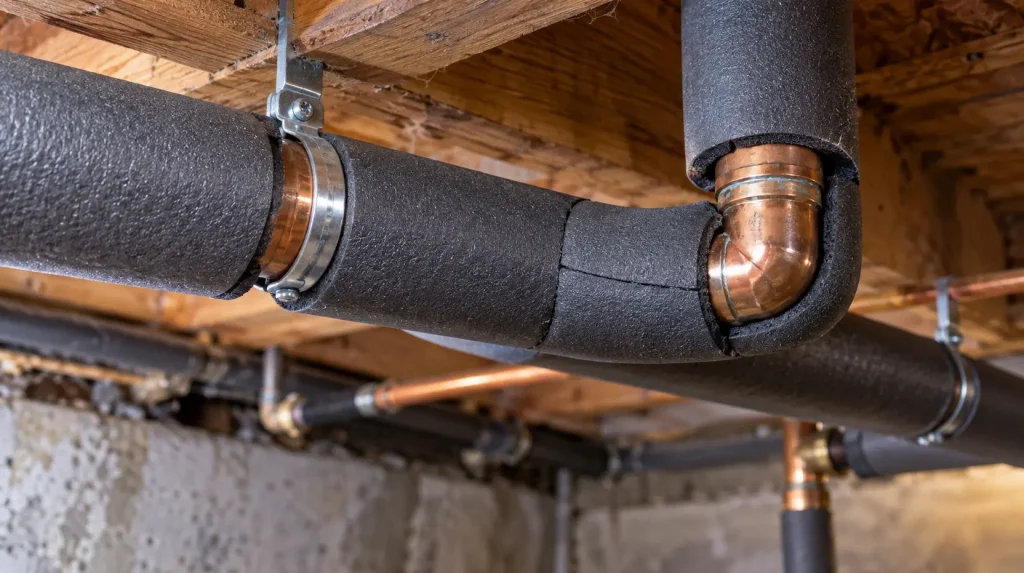
Common options include foam pipe sleeves, fiberglass pipe insulation, and other products rated for the intended pipe and temperature conditions. The appropriate product depends on pipe diameter, location, moisture exposure, and the manufacturer’s installation requirements.
Measure the pipe before purchasing materials. Insulation should fit closely without leaving large gaps, and seams should be secured according to the product instructions. Elbows, tees, valves, and other fittings may need specially cut sections or compatible insulation accessories.
Do Not Leave Gaps at Joints
A long, insulated straight section can still have vulnerable spots around elbows, valves, and connections. Fit the insulation carefully and follow the manufacturer’s recommendations for sealing seams.
Pay attention to areas where the pipe enters a wall or passes near an exterior opening. Insulation on the pipe and air sealing around the penetration solve different problems, so both may be necessary.
Insulate the Pipe, Not the Problem
Before covering a pipe, inspect it for active leaks, severe corrosion, or damaged fittings. Insulation should not be used to hide an existing plumbing problem.
If the pipe is located in a space that routinely drops below freezing, consider whether insulation plus air sealing will be enough. Depending on the layout and climate, a plumber or building professional may recommend additional protection or relocating the vulnerable line.
4. Seal Cold-Air Leaks Around Plumbing Areas
Cold air can reach pipes through gaps around foundation penetrations, rim joists, window frames, and other openings. In older homes, these small leaks can make a basement or crawl space significantly colder than expected.
Inspect accessible areas on a dry day and look for visible gaps or drafts. Seal appropriate openings with materials designed for the location and follow the manufacturer’s safety instructions.
Use care around combustion appliances, flues, and mechanical equipment. Do not block required combustion air, ventilation openings, drainage paths, or other openings needed for safe building operation. If you are unsure whether an opening is intentional, ask a qualified professional before sealing it.
Crawl spaces require special attention. The correct moisture and ventilation strategy depends on the home’s design, local climate, and building requirements. Do not automatically close every foundation vent or change the crawl-space configuration without assessing moisture control and applicable requirements.
5. Keep the Home Warm During Freezing Weather
Maintaining consistent indoor heat is important because pipes often freeze when the spaces around them become too cold, even if the main living room still feels comfortable.
Set the Thermostat Before a Cold Snap
A commonly recommended minimum thermostat setting when leaving a home during cold weather is 55°F (13°C). However, this is a general precaution, not a guarantee that pipes inside exterior walls, garages, or crawl spaces will remain above freezing.
If your home has a history of frozen pipes, a poorly insulated exterior wall, or vulnerable plumbing in an unheated space, additional protection may be necessary. Do not assume that one thermostat setting can compensate for every construction problem.
Open Cabinet Doors Where Pipes Are Vulnerable
During unusually cold weather, opening kitchen or bathroom cabinet doors can help warmer indoor air circulate around supply pipes. This is especially useful when the cabinet is against an exterior wall.
Remove household chemicals and other items that could become accessible to children or pets before leaving the doors open. This measure can help in some situations but does not replace pipe insulation or adequate heating.
Keep Interior Doors Open When Helpful
If a vulnerable pipe is located in a room that receives little heat, keeping the interior door open can improve air circulation. Check rooms near exterior walls, laundry areas, and utility spaces.
Be careful when using space heaters. Follow the manufacturer’s clearance requirements, keep heaters away from combustible materials, and never leave equipment operating contrary to its instructions. Do not use a portable heater in a wet area or where electrical hazards may exist.
6. Winterize Outdoor Faucets and Water Lines
Outdoor hose connections are easy to overlook, yet they can cause major damage when water freezes in vulnerable sections of the plumbing.
Disconnect Garden Hoses
Remove hoses from outdoor faucets before freezing weather. A connected hose can retain water and interfere with the faucet’s ability to drain, increasing the risk of freezing and damage.
Shut Off and Drain Interior-Supplied Outdoor Faucets When Appropriate
If your home has an interior shutoff valve for an outdoor faucet, follow the system’s winterizing procedure. In many installations, this means closing the interior valve and opening the outdoor faucet to drain remaining water. Some systems require additional steps, and not every faucet is configured the same way.
Frost-free hose bibs can reduce risk when installed with the correct slope and used as intended, but they can still freeze if a hose remains attached or if the installation is incorrect. Check the manufacturer’s instructions and seek help if you do not know how your outdoor faucet is arranged.
Protect Irrigation and Specialty Lines
Sprinkler systems, exterior kitchens, detached workshops, and other seasonal water lines may require separate shutdown and draining procedures. Follow the system manufacturer’s winterizing instructions or use a qualified irrigation or plumbing professional.
7. Should You Use Heat Tape or Heating Cables?
In some homes, insulation and air sealing may not be enough to protect a particularly vulnerable pipe. Listed heat-tracing equipment designed for the pipe material and installation environment can provide additional protection when installed correctly.
However, heating cables are not a universal fix. They must be compatible with the pipe, installed according to the manufacturer’s instructions, and used with the required electrical protection. Some products must not be overlapped or covered with certain types of insulation unless the instructions specifically allow it.
Do not use damaged, unapproved, or improvised heating equipment around plumbing. If the pipe is concealed, severely corroded, or close to combustible building materials, have a qualified professional evaluate the installation.
8. Compare Common Frozen-Pipe Prevention Options
The best option depends on the location and severity of the freezing risk. The table below compares typical approaches using relative cost levels rather than fixed national prices. Actual costs vary by region, labor rates, accessibility, pipe material, and the amount of work required.
| Prevention Method | Relative Cost | Installation | Maintenance | Advantages | Limitations |
|---|---|---|---|---|---|
| Foam pipe insulation | Low | Fit suitable sleeves around accessible pipes and cover vulnerable sections | Inspect for gaps, moisture, and damage before winter | Simple and often suitable for accessible pipes | Slows heat loss but does not generate heat |
| Air sealing around pipe penetrations | Low to moderate | Use compatible sealing materials in suitable locations | Check seals and nearby building materials periodically | Reduces cold drafts that can chill pipes | Must not block required ventilation or combustion air |
| Thermostat and cabinet-door precautions | Low | Maintain adequate heat and improve warm-air circulation | Monitor indoor temperatures during cold snaps | Easy to implement without plumbing modifications | May not protect pipes in very cold or unheated spaces |
| Listed heat-tracing cable | Moderate | Install compatible equipment according to its instructions | Inspect the system and electrical components as directed | Can provide active protection in high-risk locations | Requires correct selection, installation, and electrical safety |
| Professional pipe relocation or repiping | High | Requires plumbing assessment, labor, and possible wall repairs | Inspect the plumbing and surrounding insulation | May permanently reduce exposure in a badly designed pipe route | More expensive and disruptive than surface insulation |
| Professional weatherization or crawl-space improvements | Moderate to high | Improve insulation and air sealing using a suitable building-specific plan | Monitor moisture, drainage, and insulation condition | Can address several cold-weather problems together | Requires attention to moisture control and building design |
For many accessible pipes, insulation and correcting cold-air leaks are sensible first steps. If a pipe freezes repeatedly despite these measures, investigate why the surrounding area becomes so cold before spending money on additional products.
9. What to Do If a Pipe Freezes
If a faucet suddenly produces little or no water during a cold snap, a frozen pipe is one possible explanation. Do not ignore the problem simply because you cannot see a leak. A pipe may already be damaged, and leakage may become apparent when the ice begins to thaw.
Step 1: Locate the Affected Fixture or Pipe
Check whether other faucets still work. If only one fixture is affected, the frozen section may be near that fixture or along its supply line. If several fixtures lose water, the problem may be farther upstream.
Inspect accessible pipe runs in basements, garages, and other vulnerable spaces. Do not tear open a wall merely because a pipe is suspected to be frozen.
Step 2: Check for Signs of a Burst Pipe
Look for water stains, dripping, wet insulation, or damp flooring near the affected line. If you discover a leak or suspect that the pipe has burst, shut off the main water supply if it is safe to do so and contact a plumber.
If water is near electrical equipment, stay clear of the affected area. Do not touch electrical panels or appliances while standing in water.
Step 3: Apply Gentle Heat Only to an Accessible Pipe
If the pipe is accessible, there is no sign of a burst, and the area is safe, you may be able to thaw a small frozen section using gentle heat. Keep the affected faucet open so water can flow as the ice melts.
Suitable methods may include a hair dryer used according to its instructions or warm towels applied to the pipe. Work gradually and keep the heating method away from standing water and flammable materials.
Never use a blowtorch, open flame, charcoal stove, or other flame-producing device to thaw a pipe. Do not pour boiling water onto pipes or use electrical equipment where water creates a shock risk.
Step 4: Call a Plumber When the Pipe Is Inaccessible or the Risk Is High
If the frozen section is inside a wall, ceiling, or other inaccessible space, professional help is safer than cutting into the building without knowing what is behind the surface.
After the line thaws, inspect it carefully for leaks. A crack may not become obvious until water pressure returns. If you cannot determine whether the pipe is damaged, have it checked before assuming the problem is solved.
10. Prepare Your Older Home Before Leaving for a Winter Trip
An empty house can be more vulnerable because nobody is present to notice a failed furnace, frozen faucet, or water leak. Before leaving during winter, take a few precautions.
- Keep the thermostat at an appropriate setting for the expected weather and the home’s plumbing layout.
- Inspect vulnerable pipe insulation and make sure exposed sections are protected.
- Disconnect garden hoses and winterize exterior faucets as appropriate.
- Make sure the main water shutoff is identified and accessible.
- Ask a trusted person to check the house during an extended cold spell, especially if the property has a history of freezing.
- Consider a temperature or water-leak sensor in a high-risk area, but do not rely on an alarm as a substitute for heat and physical protection.
- If shutting off the main water supply is appropriate for your home’s plumbing and appliances, consider having a plumber explain the implications before the trip. Some heating, fire-protection, or other systems may require an active water supply.
If the heating system fails while you are away, a pipe in an exterior wall or crawl space may freeze before the problem is discovered. A planned check-in and a clearly identified shutoff can reduce the time it takes to respond.
11. Practical Scenarios: Which Prevention Method Is Best?
Scenario A: The Basement Pipes Freeze During Severe Cold
Start by checking whether cold air enters around basement windows, rim joists, or plumbing penetrations. Insulate accessible pipes and correct suitable air leaks. If the space continues to become dangerously cold, a professional may need to evaluate insulation, heating, or pipe relocation.
Scenario B: The Kitchen Sink Stops Working During a Cold Snap
If the sink is installed against an exterior wall, inspect accessible supply lines and check whether the cabinet interior is much colder than the rest of the room. Opening the cabinet doors may improve warm-air circulation. If the pipe is hidden or no water returns, contact a plumber rather than using open-flame heating methods.
Scenario C: An Older House Has a Crawl Space With Water Pipes
Inspect the pipe route, insulation, moisture conditions, and cold-air pathways. The correct solution might involve pipe insulation, air sealing, improved thermal protection, or a broader crawl-space assessment. Do not seal foundation vents or change the moisture strategy without checking the building design and local requirements.
Scenario D: You Own a Seasonal Property That Sits Empty All Winter
Consider a professional winterization plan. Depending on the plumbing design, it may involve shutting off the water, draining vulnerable lines, protecting fixtures and traps, and managing appliances appropriately. Simply turning off the thermostat or closing the main valve may not fully winterize the system.
For related advice on pipe repair, maintenance, and protecting older plumbing systems, place your relevant category link here: 【在这里加入Plumbing分类页的相关分类页内链】
12. Frequently Asked Questions
At What Temperature Do Water Pipes Freeze?
Water freezes at 32°F (0°C) under ordinary conditions. However, a pipe does not necessarily freeze the moment the outdoor temperature reaches 32°F. The risk depends on how cold the pipe becomes, how long the cold lasts, whether cold air reaches it, and the amount of insulation and surrounding heat. Pipes in exposed or unheated areas can be at greater risk during prolonged freezing weather.
What Temperature Should I Keep My House at to Prevent Frozen Pipes?
A commonly recommended minimum during cold weather when leaving a home is around 55°F (13°C). Some homes need a higher setting or extra protection because vulnerable pipes may be located in exterior walls, garages, crawl spaces, or other cold areas. Maintaining the thermostat at 55°F is a precaution, not a guarantee that every pipe will remain safe.
Should I Leave My Faucet Dripping During a Freeze?
A small, steady trickle from a faucet served by a vulnerable pipe may help reduce freezing risk in certain situations, especially during severe cold. However, dripping water is not a substitute for insulation, adequate heat, or professional repairs to a known problem area. Follow local utility or plumbing guidance, and make sure the drain can handle the flow without freezing or overflowing.
Does Pipe Insulation Guarantee That My Water Pipes Will Not Freeze?
No. Insulation slows heat loss but does not create heat. Pipes in a very cold crawl space, garage, or exterior wall can still freeze during prolonged cold weather. The best approach combines suitable insulation with air sealing, adequate heating, and additional protection where necessary.
What Should I Do if a Frozen Pipe Bursts?
Shut off the main water supply if it is safe to reach, stay away from electrical hazards, and contact a plumber. If water is spreading, protect belongings only when it is safe to do so. Document the damage and contact your insurer if appropriate. After the immediate problem is controlled, arrange drying and repairs to prevent secondary damage.
Conclusion
Preventing frozen pipes in an older home begins with understanding where the plumbing is exposed to cold. Basements, crawl spaces, exterior walls, garages, and outdoor faucets deserve particular attention before winter arrives.
Insulate accessible pipes, seal appropriate cold-air leaks, maintain adequate indoor heat, disconnect outdoor hoses, and know how to shut off the water. If pipes freeze repeatedly, look beyond the immediate symptom and investigate the insulation, air leakage, and routing of the plumbing itself.
When a pipe freezes, use safe thawing methods only when the pipe is accessible and the area is safe. Avoid open flames, and call a plumber when the pipe is concealed, damaged, or difficult to reach. A little preparation before severe cold can help protect your plumbing, reduce the risk of burst pipes, and prevent costly winter water damage.