
Water damage and excess moisture are common concerns in older homes across the United States. A small roof leak, a loose plumbing connection, poor drainage around the foundation, or condensation in a poorly ventilated bathroom can gradually lead to stained walls, damaged flooring, wood rot, musty odors, and mold growth.
Unlike a sudden burst pipe, moisture problems do not always announce themselves with standing water. Sometimes the first warning is a faint musty smell in the basement, paint bubbling near a window, a ceiling stain that appears after heavy rain, or a floorboard that begins to feel soft underfoot.
The challenge is that older homes have different construction methods, materials, and maintenance histories. A brick house with a stone foundation may have different moisture issues from a wood-framed house with a vented crawlspace. Effective repairs start with identifying where the water comes from rather than simply covering the visible damage.
This guide explains the most common causes of water damage in older American homes, how to recognize early warning signs, which repairs are worth considering, and what homeowners can do to prevent moisture problems from returning.
Quick Answer: What Causes Water Damage in Older Homes?
Water damage in older homes most often results from leaking roofs, deteriorating flashing, clogged gutters, aging plumbing, failing window seals, foundation seepage, poor exterior drainage, or excessive indoor humidity.
The most reliable approach is to stop the water source, dry affected materials promptly, assess hidden damage, and repair the underlying problem before replacing cosmetic finishes. Painting over a water stain or applying a waterproof coating without finding the source may hide the symptoms while the damage continues behind the wall.
1. Common Signs of Water Damage and Excess Moisture
Moisture problems are easier and usually less expensive to address when they are discovered early. Pay attention to changes in both the appearance of building materials and the way rooms smell or feel.
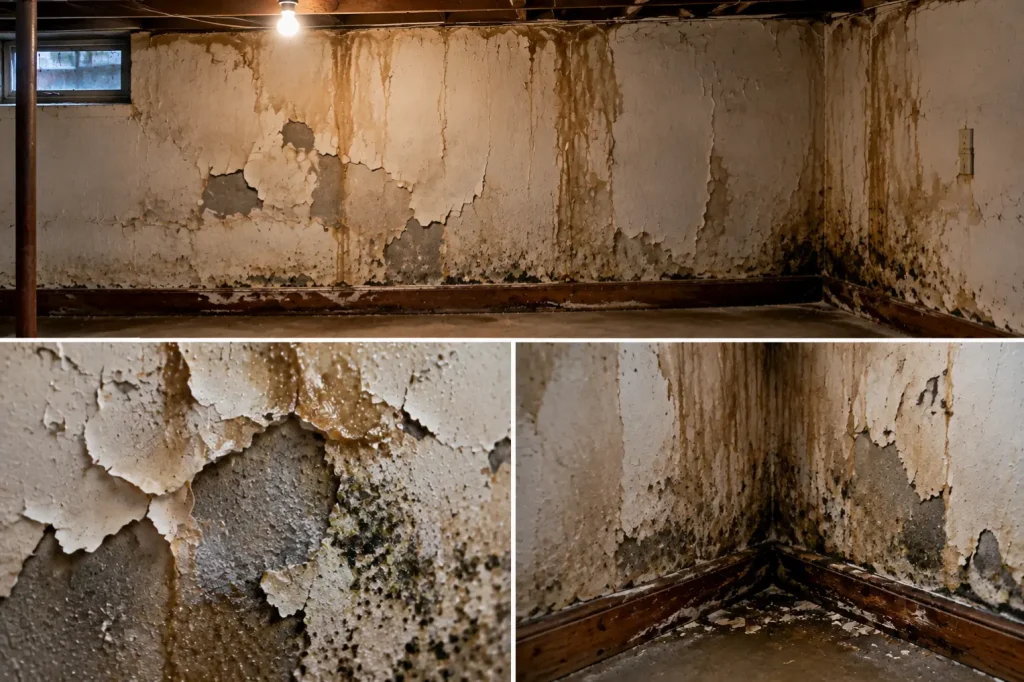
- Water stains on ceilings and walls: Yellow, brown, or irregular stains may indicate roof leaks, plumbing leaks, or water entering around windows.
- Peeling paint or bubbling drywall: Moisture can weaken paint adhesion and damage the paper facing of drywall.
- Musty odors: A persistent earthy smell in a basement, closet, or crawlspace may indicate damp materials or concealed microbial growth.
- Soft or swollen wood: Spongy trim, warped hardwood flooring, swollen baseboards, or deteriorating subflooring can signal prolonged moisture exposure.
- White deposits on masonry: Powdery white deposits on brick or concrete may be efflorescence, which occurs when water carries dissolved salts to the surface. It can indicate moisture movement but does not identify the source by itself.
- Condensation on windows: Repeated water droplets on window glass may indicate high indoor humidity, cold surfaces, or inadequate ventilation.
- Recurring dampness after rain: Water appearing near basement walls or crawlspace edges often calls for an inspection of gutters, grading, downspouts, and foundation drainage.
A single sign does not always establish the cause. For example, condensation on a window is different from rainwater entering through failed flashing, even though both can leave moisture around the same area.
2. The Most Common Causes of Moisture in Older American Homes
Roof Leaks and Deteriorating Flashing
Roofing materials, flashing, roof penetrations, and the areas around chimneys can deteriorate over time. Missing shingles, damaged flashing, cracked sealant, and poorly maintained roof valleys may allow rainwater to enter the attic and travel along framing before becoming visible on a ceiling.
The location of a ceiling stain is not necessarily directly below the leak. Water can move along roof sheathing, rafters, pipes, and other building components before reaching an interior surface.
If a stain becomes more noticeable after wind-driven rain, inspect the roof, attic, chimney flashing, and nearby exterior details. Avoid climbing onto a wet or damaged roof. A qualified roofing professional can investigate safely.
Clogged Gutters and Poor Exterior Drainage
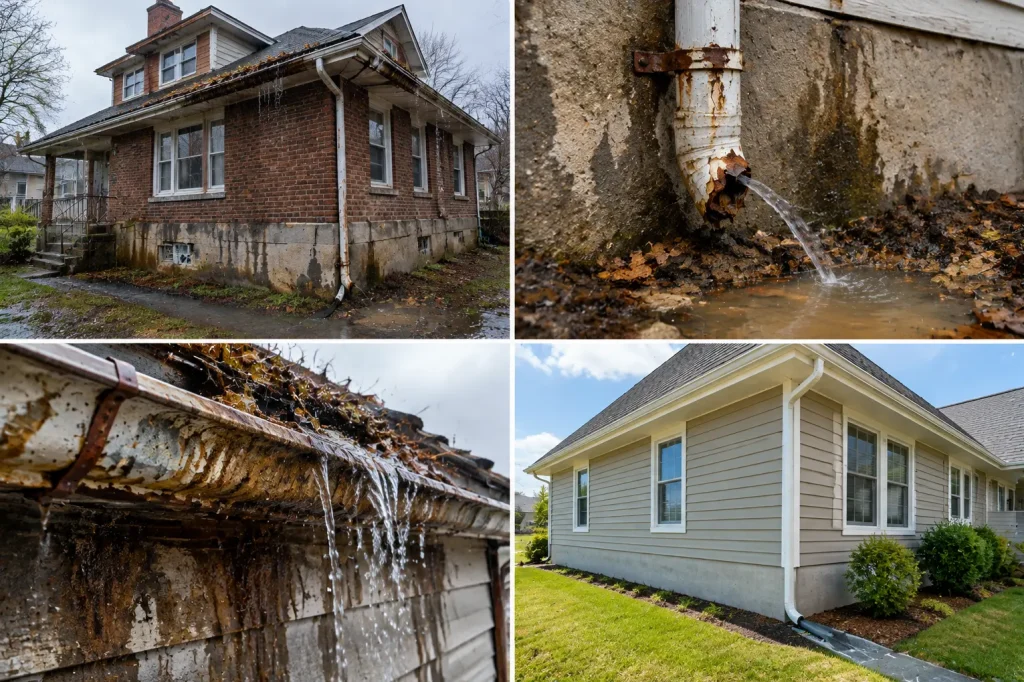
Gutters and downspouts help move roof runoff away from the house. When gutters overflow or downspouts discharge beside the foundation, water can collect near basement walls, enter through cracks, or saturate the soil around a crawlspace.
Older properties sometimes have settled walkways, uneven soil, buried downspout extensions, or landscaping that slopes toward the house. These conditions can gradually direct water where it should not go.
Check whether rainwater flows away from the foundation, whether gutters overflow during storms, and whether downspouts discharge into areas where water pools. Correcting these drainage problems is often a sensible first step before investing in more extensive foundation work.
Aging Plumbing and Hidden Pipe Leaks
Older homes may contain a mixture of original and replacement plumbing materials. Supply lines, drainpipes, shutoff valves, faucet connections, and appliance hoses can all develop leaks as materials age, joints loosen, or components deteriorate.
A small plumbing leak inside a cabinet or behind a wall may continue for weeks before it creates a visible stain. Watch for unusually damp cabinet floors, unexplained increases in water use, reduced water pressure, or moisture near plumbing fixtures.
If a leak is active, shut off the appropriate water supply when it is safe to do so. A concealed pipe leak may require a licensed plumber to locate the problem and determine whether a localized repair or a larger replacement is appropriate.
For older galvanized steel water pipes, internal corrosion and mineral buildup can also restrict water flow. These issues are not the same as an external leak, but deteriorating plumbing should be evaluated as part of a broader maintenance plan.
Foundation Cracks and Basement Seepage
Basements in older homes can experience moisture intrusion because of foundation cracks, deteriorated mortar joints, exterior drainage problems, hydrostatic pressure, or failures in existing waterproofing systems.
Small cracks are not automatically evidence of a serious structural problem. However, cracks that widen, show displacement, repeatedly leak, or appear with bowing walls and sticking doors deserve professional evaluation.
It is important to distinguish liquid water entering through a foundation from humidity condensing on a cool basement wall. The first may require drainage or water-entry repairs; the second may be improved through humidity control, ventilation, insulation, or air sealing, depending on the building conditions.
Window Leaks, Siding Gaps, and Failed Exterior Seals
Water can enter around windows and doors when flashing is missing or damaged, caulking has failed, siding details are poorly maintained, or exterior materials allow rainwater to reach vulnerable joints.
Simply applying new caulk over an old joint may not solve the problem. If the original flashing is missing or the surrounding materials are damaged, water may continue to enter behind the exterior finish.
Look for stains below window corners, deteriorating trim, swollen interior window sills, and damage that becomes worse after wind-driven rain. Repairs should address the complete water-management detail rather than only the visible gap.
High Indoor Humidity and Condensation
Not every moisture problem comes from a leak. Cooking, showering, clothes drying, and everyday occupancy add moisture to indoor air. In older homes, insufficient bathroom exhaust, poorly vented clothes dryers, air leaks, and cold exterior walls can allow moisture to accumulate.
When humid air meets a cold surface, water may condense on windows, pipes, exterior corners, or other surfaces. Repeated condensation can damage finishes and create conditions that support mold growth.
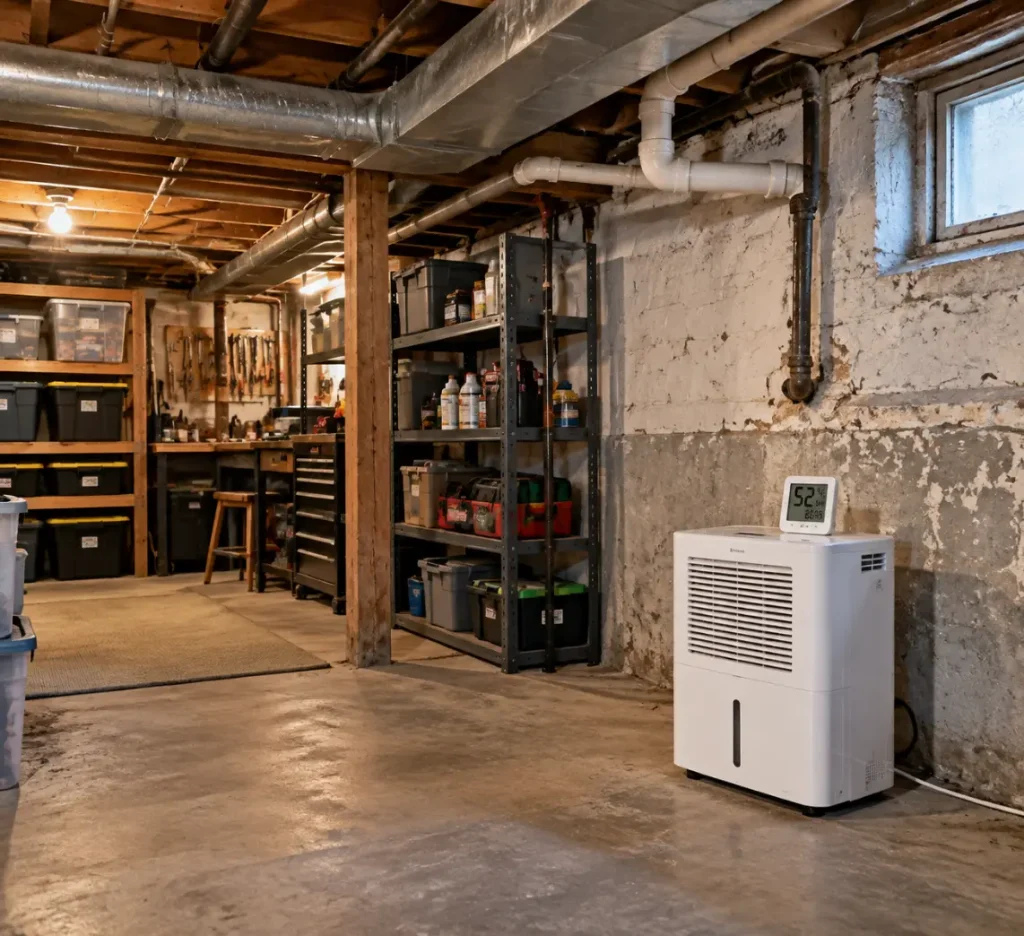
A simple digital hygrometer can help monitor indoor relative humidity. As a general target, aim for approximately 30% to 50% relative humidity when practical and keep it below 60% to reduce the likelihood of persistent dampness. The appropriate setting can vary with outdoor temperature, climate, and the condition of the home.
3. What Should You Do First After Discovering Water Damage?
The first priority is to stop the source of the moisture. Drying a room without correcting the cause can lead to repeated damage and unnecessary repair costs.
- Make the area safe. Stay away from standing water near electrical equipment, outlets, or wiring. Do not enter a flooded area if electrical hazards may be present.
- Stop the water if possible. Shut off a leaking fixture or the relevant water supply if you can do so safely. For roof or foundation leaks, arrange a safe inspection and temporary protection when appropriate.
- Document the damage. Photograph affected rooms, ceilings, floors, belongings, and the suspected source before removing materials, provided documenting the damage does not delay urgent safety measures.
- Remove standing water and begin drying. Use appropriate extraction, air movement, and dehumidification when safe. Wet porous materials may need removal if they cannot be dried adequately.
- Check for hidden moisture. Water can travel behind baseboards, under flooring, into wall cavities, and around insulation. A moisture meter or professional inspection may help identify affected areas.
- Arrange specialist help when necessary. Sewage, contaminated floodwater, extensive mold, damaged electrical systems, structural deterioration, or persistent hidden leaks require appropriate professional assessment.
Where feasible, wet materials should be dried within 24 to 48 hours to help reduce the risk of mold growth. This is a practical target, not a guarantee that mold will never develop. Material type, temperature, existing contamination, and the extent of saturation all affect the outcome.
4. Water Damage Repair Options: Cost, Installation, and Maintenance
The right repair depends on the source of the water, how long the materials have been wet, how easily the affected area can be accessed, and whether structural components have deteriorated. The following table provides a general comparison rather than a contractor quote.
| Problem | Typical Repair | Relative Cost | Maintenance | Main Benefit and Limitation |
|---|---|---|---|---|
| Clogged gutters or short downspouts | Clean gutters, repair joints, and extend downspouts away from the foundation | Low to moderate | Inspect and clean regularly, especially after storms or leaf fall | Often a straightforward drainage improvement; it will not fix every foundation leak. |
| Roof leak or damaged flashing | Repair roofing materials, flashing, or vulnerable roof details | Moderate; potentially high for extensive damage | Inspect the roof and drainage system periodically | Stops rainwater at its source; concealed sheathing or framing damage may increase the scope. |
| Localized plumbing leak | Repair a connection, valve, fixture, or damaged pipe section | Low to moderate; potentially high if walls or floors must be opened | Check exposed connections and monitor recurring leaks | Can prevent further water damage quickly; hidden corrosion or multiple failing pipes may require a broader plan. |
| Basement seepage or poor grading | Correct surface drainage, manage downspouts, repair appropriate entry points, or assess drainage systems | Moderate to high | Keep drainage paths clear and monitor the basement during rain | Addresses recurring water entry; the correct solution depends on the source and site conditions. |
| High indoor humidity | Improve exhaust ventilation, control moisture sources, or use a properly sized dehumidifier | Low to moderate | Check humidity, clean equipment, and maintain exhaust systems | Useful for condensation and damp air; it will not repair a leaking roof or pipe. |
| Leaking window or exterior joint | Repair flashing, damaged trim, failed joints, or surrounding exterior materials | Moderate; potentially high if concealed damage is extensive | Inspect exterior joints and maintain drainage details | Can stop rain penetration when correctly diagnosed; surface caulking alone may not address deeper failures. |
Actual costs vary substantially across the United States. Labor rates, local building requirements, material availability, access, water contamination, and the amount of hidden damage can all change the final price. A repair that initially appears minor may become more involved after wet insulation, damaged subflooring, or deteriorated framing is exposed.
For significant work, compare written estimates that describe the source of the problem, the proposed repair, the materials to be replaced, and any drying or follow-up testing. The cheapest estimate is not necessarily the best choice if it addresses only the visible damage.
5. How to Choose the Right Repair for Your Situation
If the ceiling stains appear after heavy rain: Start with the roof, flashing, gutters, and the exterior wall above the affected room. Do not assume the ceiling itself is the source of the problem.
If the basement becomes damp after storms: Look first at gutters, downspouts, soil grading, window wells, and visible foundation entry points. If water continues to enter, have the drainage and foundation conditions assessed before choosing a waterproofing system.
If the basement smells musty but no standing water is visible: Check relative humidity, condensation on cool surfaces, stored materials, floor edges, and concealed plumbing. A moisture meter or professional inspection may help distinguish condensation from hidden water intrusion.
If a cabinet or wall is wet near a plumbing fixture: Check supply connections, drain joints, appliance hoses, and the fixture itself. Stop active leakage promptly and consider whether other original plumbing components show signs of deterioration.
If mold returns after cleaning: Investigate the moisture source. Cleaning the surface without fixing the water problem will often produce only a temporary improvement.
If a foundation crack is growing or the wall is bowing: Do not treat it as a routine caulking job. Arrange an evaluation by an appropriately qualified foundation or structural professional.
For related homeowner guidance, connect this article to the site’s dedicated moisture and water-damage topic area rather than linking to an unrelated remodeling subject.
Category-page internal link: 在这里加入xxxx的相关分类页内链。建议使用自然锚文本 “water damage and moisture repair guides”,链接到网站的 “Water Damage & Moisture” 分类页。
6. Practical Ways to Prevent Future Moisture Problems
Prevention is usually less disruptive than repairing a finished wall, replacing flooring, or rebuilding damaged framing. A few regular checks can help homeowners notice developing problems before they spread.
- Inspect the roof and gutters. Look for damaged shingles, loose flashing, blocked gutters, and downspouts that release water beside the house.
- Keep water moving away from the foundation. Maintain appropriate soil grading and repair areas where runoff repeatedly collects. Before changing drainage, consider neighboring properties and local requirements.
- Check under sinks and around appliances. Look for damp cabinet bases, loose connections, deteriorating hoses, and water marks around plumbing fixtures.
- Use exhaust ventilation. Run bathroom and kitchen exhaust fans when appropriate and confirm that exhaust air is discharged outdoors rather than into an attic or wall cavity.
- Monitor indoor humidity. A hygrometer helps identify persistent high humidity. A dehumidifier may help in a damp basement, but the underlying water source still needs attention.
- Inspect basements and crawlspaces after heavy rain. Pay attention to damp corners, condensation, musty odors, and new staining.
- Maintain windows and exterior materials. Repair deteriorated trim and failed joints, but do not rely on sealant to compensate for missing flashing or incorrect drainage details.
- Deal with leaks quickly. Even a slow drip can damage cabinets, subfloors, insulation, or framing if it continues long enough.
7. Special Considerations When Repairing Older Homes
Moisture repair in an older home requires more than choosing a waterproofing product. Existing walls, foundations, and finishes may have been built using materials and methods different from those used in modern construction.
Be careful with historic masonry. Older brick and stone walls may need compatible repair materials and an appropriate moisture-management strategy. Applying an unsuitable coating or sealant can sometimes trap moisture or worsen deterioration.
Investigate before replacing finishes. A new coat of paint, fresh drywall, or replacement flooring can hide a continuing leak. Confirm that the source has been corrected and the affected assembly is adequately dry before rebuilding.
Consider hazardous older materials. Some older homes may contain lead-based paint, asbestos-containing materials, or other hazardous substances. Before cutting, sanding, demolishing, or disturbing suspect materials, seek guidance from appropriately qualified professionals.
Be cautious with mold cleanup. Mold can grow on damp building materials when conditions allow. Do not simply paint over visible growth. Large or recurring areas, mold in HVAC systems, contaminated water, or moisture inside inaccessible building cavities may need professional assessment and remediation.
For authoritative background on mold and moisture, homeowners can consult the U.S. Environmental Protection Agency’s mold guidance and the U.S. Department of Energy’s moisture-control resources.
8. Frequently Asked Questions
1. What is the most common cause of water damage in older homes?
There is no single cause for every older home. Roof leaks, plumbing failures, clogged gutters, poor drainage, foundation seepage, and leaking windows are all common sources. The best starting point is to identify when and where the moisture appears, then investigate the building components connected to that location.
2. How can I tell whether basement moisture comes from a leak or condensation?
Condensation often appears on cool surfaces when humid indoor air meets them. Water intrusion may be more closely associated with rain, pooling water, foundation cracks, or damp areas that remain wet after a storm. These patterns are clues rather than proof. Persistent or concealed moisture may require professional inspection or moisture measurements.
3. Can I fix water damage myself?
Some minor problems, such as cleaning accessible gutters, replacing a simple fixture connection when you have the proper skills, or monitoring indoor humidity, may be suitable for a capable homeowner. Active leaks inside walls, extensive wet materials, structural damage, contaminated water, electrical hazards, and significant mold growth call for appropriate professional help.
4. How quickly should water-damaged materials be dried?
Start as soon as it is safe. Drying wet materials within 24 to 48 hours, where feasible, can help reduce the risk of mold growth, but the result depends on the materials and conditions. Saturated insulation, swollen composite flooring, and damaged drywall may not be salvageable simply by using a fan or dehumidifier.
5. Will waterproof paint or a dehumidifier permanently solve a damp basement?
Not necessarily. Waterproof coatings may be appropriate in some situations, and a dehumidifier can help manage excess humidity. Neither automatically fixes leaking pipes, poor exterior drainage, groundwater pressure, or water entering through defective foundation details. Determine the cause first and choose a solution that addresses it.
Conclusion: Fix the Moisture Source Before Repairing the Damage
Water damage and excess moisture in older homes are manageable when the source is identified early and the repair matches the problem. Roof leaks, aging plumbing, foundation seepage, poor drainage, and indoor condensation each require a different response.
Start with a careful inspection, correct the source of the water, dry affected materials promptly, and check for concealed damage before restoring walls, ceilings, or flooring. Regular gutter maintenance, sensible humidity control, plumbing inspections, and attention to warning signs can reduce the chance of future damage.
Most importantly, do not treat a recurring water stain or musty smell as a purely cosmetic issue. In an older home, visible damage may be only the final sign of a problem that has been developing behind the surface. A well-targeted repair protects the building more effectively than repeatedly covering up the symptoms.
